Prepare metal surfaces properly through sandblasting — for a paint job that lasts
Sandblasting doesn't just clean: it removes rust and old paint and creates the anchor profile (the roughness) the new paint needs to adhere and not peel.
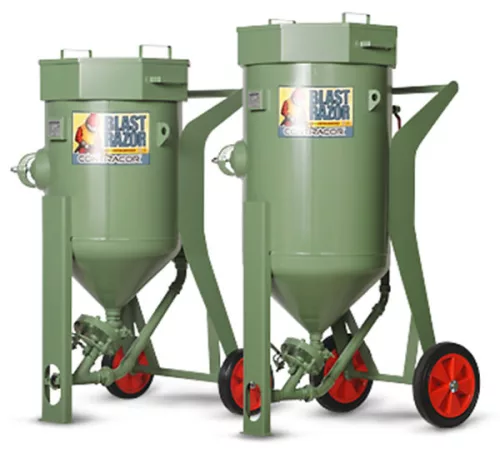 BlastRazor Z-100
Paint applied to a superficially cleaned surface peels within a few months — because it has nothing to grip onto.
A paint job lasts exactly as long as the surface was well prepared. If the rust, oxide and old paint are not removed down to clean metal — and if the surface stays glossy, with no profile — the new coating has nothing to grip onto and peels within a few months.
Sandblasting solves both at once: it removes contaminants down to clean metal and creates the anchor profile (the roughness) the paint needs for durable adhesion. The abrasive and pressure are chosen to suit the material, from fine parts to thick steel or car bodies.
Below you can see the mechanism, the recommended equipment and what proper preparation means for the durability of the work.
Consequences
What happens without proper preparation
- !The paint peels and rust appears underneath
- !Redoing the work — wasted time and material
- !Advanced corrosion under the paint layer
- !Uneven appearance and poor adhesion
- !Lost warranty on coating work
The solution
How sandblasting prepares the surface — cleaning + profile
Abrasive projected under pressure removes rust, paint and oxide down to clean metal, then creates a roughness profile (anchor pattern). This micro-texturing is exactly what allows the paint or coating to bond mechanically and last over time.
| Parameter | Value | Role |
|---|---|---|
| Action | curățare + profilare | Clean metal + roughness for adhesion |
| Abrasive | chosen for the material | From delicate parts to thick steel |
| Result | surface ready for painting | Adhesion and durability of the coating |
- Sandblasting removes rust, paint and oxide down to clean metal.
- Creates the anchor profile (the roughness) the paint needs for durable adhesion.
- The abrasive and pressure are chosen to suit the material — from fine parts to thick steel.
- Uniform preparation, including in corners and on complex geometries.
See it for yourself
Abrasive blasting on film — machine with abrasive module
Descoperă versatilitatea aparat de sablare cu gheață și nisip Cryonomic! ❄✨ · HD CleanersCommentary in Romanian.
Who it is for
The same problem, across several industries
Recommended equipment
Recommended equipment: BlastRazor — sandblasting
BlastRazor Z-100
Sandblasting equipment for preparing metal surfaces — it removes rust and paint and creates the anchor profile, with the abrasive chosen to suit the application.
Price excludes VAT and shipping costs
ROI and risk
Proper preparation = work that doesn't need redoing
- Avoid redoing peeled paintwork
- More durable coatings, fewer complaints
- Higher productivity than manual cleaning
- Risk-free trial: AUTONOM rent-to-buy
Frequently asked questions
What we get asked most
Why is sandblasting needed before painting?+
Does sandblasting damage thin parts?+
Can I also sandblast car bodies?+
Show us what needs cleaning.
We'll help you decide what to test first.
Send us a few details, photos or a short video of the application. Within one business day, a technical sales consultant will review it and come back with the next best step — additional questions, a first recommendation or a proposed test.