Clean electrical panels and cabinets — no water, no disassembly
Dry ice (-78,5 °C) removes dust, oil and deposits from electrical components through a dry, non-conductive process — no water, no abrasive and no residue to clean up afterwards.
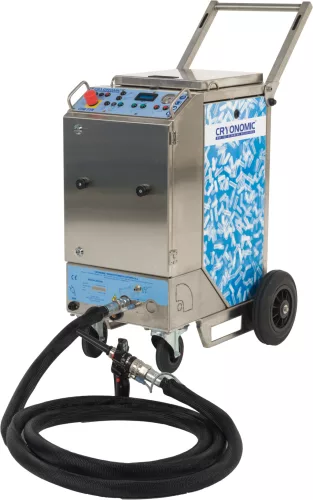 CRYONOMIC COB 71
Cleaning panels with compressed air only moves the dust around, and with liquids you risk short circuits and long shutdowns for drying.
Conductive dust, oil and deposits on panels, motors and automation are not just a cleanliness problem — they cause overheating, intermittent faults and unplanned shutdowns. And the classic methods each have a hidden cost: compressed air only moves the dust around, liquids bring the risk of short circuits and hours of drying, and abrasive sandblasting wears the components.
Dry-ice blasting solves exactly this trade-off. The CO₂ pellets at -78,5 °C lift the deposits through a thermal shock, then sublimate — they pass directly into gas, without leaving water, sand or residue. The process is dry, non-conductive and non-abrasive, so the equipment can often be cleaned without full disassembly.
Below you will find the mechanism, the relevant parameters, the recommended equipment and what it means for downtime and risk.
Consequences
What you risk with classic methods
- !Short circuits and faults caused by moisture
- !Long shutdowns for disassembly and drying
- !Conductive dust left behind that causes overheating
- !Wear on components from abrasive cleaning
- !Risk to personnel when working with liquids near live voltage
The solution
How dry ice cleans — dry and non-conductive
The dry ice pellets are projected onto the surface at high speed. The cold lifts the deposits, and the pellets sublimate (pass directly from solid to gas) — no water, no granules and no residue to clean up remains. The process is non-conductive and non-abrasive.
| Parameter | Value | Role |
|---|---|---|
| Cleaning medium | CO₂ pellets, -78,5 °C | Lift the deposits through thermal shock |
| Residue | only CO₂ gas | The pellets sublimate — nothing to clean up afterwards |
| Water | zero | No risk of short circuit or drying times |
- The process is dry and non-conductive — suitable for components under low voltage, without the risk of water.
- The pellets sublimate on impact — no water, sand or secondary residue to remove remains.
- Non-abrasive — it cleans without wearing the contacts, boards or insulation.
- Often cleaned without full disassembly, reducing downtime.
See it for yourself
Electrical equipment cleaned with dry ice, without water
Curățare Generatoare cu Gheață Carbonică în Industria Energetică • Aparat Cryonomic • HD CleanersCommentary in Romanian.
Who it is for
The same problem, across several industries
Recommended equipment
Recommended equipment: Cryonomic, dry-ice blasting
CRYONOMIC COB 71
A professional dry-ice cleaning system for electrical and industrial equipment — a dry, non-conductive process, no residue.
ROI and risk
Less downtime, without the risk of water
- Reduce shutdowns — often without full disassembly
- Eliminate the short-circuit risk of wet cleaning
- No residue to collect and dispose of afterwards
- Risk-free trial: AUTONOM rent-to-buy
Frequently asked questions
What we get asked most
Is it safe to clean electrical components with dry ice?+
Is there residue after cleaning?+
Does the equipment have to be disassembled?+
Does dry ice wear the components?+
Show us what needs cleaning.
We'll help you decide what to test first.
Send us a few details, photos or a short video of the application. Within one business day, a technical sales consultant will review it and come back with the next best step — additional questions, a first recommendation or a proposed test.